Kundali Matching Explained: What Your Guna Milan Score Means
Your family wants to see the kundali before they see the photos. Here is what Guna Milan actually measures, what the 36 points are made of, and how much weight a number should carry.
Published October 2026
What Is a Kundali?
A kundali (also called a janma kundali, or a birth chart) is a map of where the sun, moon and planets sat in the sky at the exact moment and place you were born. In Vedic astrology, which most Nepali and Indian families follow, the chart is drawn against the twelve rashis (zodiac signs) and the 27 nakshatras (lunar mansions, or birth stars).
In Nepal, many families have a chart made by a pandit or jyotishi soon after a child is born, often written up as a cheena (चिना) that gets kept safely at home for years. If your parents ever said "we'll need your cheena" the moment you mentioned someone, now you know why.
What Is Guna Milan (Ashtakoota)?
When two families compare charts for a marriage, the most common method is Ashtakoota, better known as Guna Milan. "Ashta" means eight and "koota" means aspect, so it looks at eight areas of compatibility. Each one carries a set number of points, called gunas, and together they add up to a maximum of 36.
Almost all of it is worked out from one thing in each chart: the position of the moon, meaning your moon sign (rashi) and your birth star (nakshatra). The higher the total, the more compatible the pairing is traditionally considered.
The Eight Kootas and Their Points
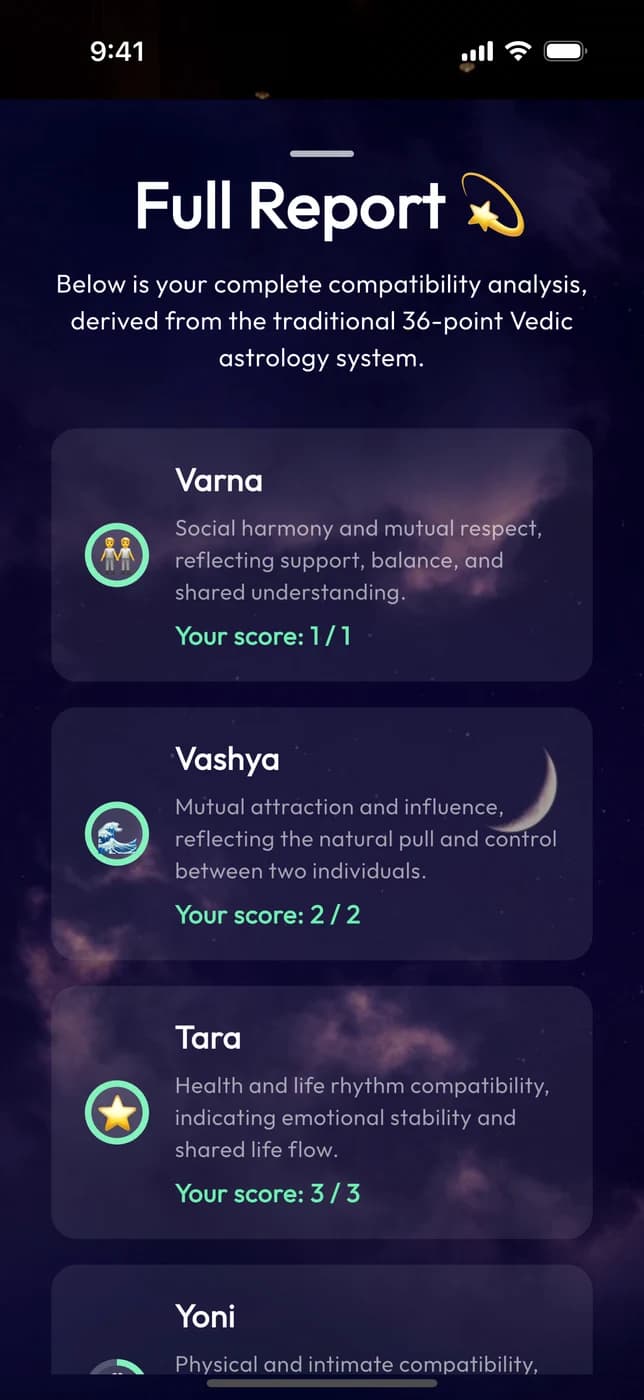
The kootas are weighted so that the later ones count for more. Here is each one, its maximum score and what it is traditionally said to reflect:
- Varna (1 point): spiritual and ego compatibility. Each moon sign is assigned to one of four varnas; it is about the chart, not anyone's actual caste or family background.
- Vashya (2 points): mutual attraction and influence, or how naturally two people draw towards each other.
- Tara (3 points): compatibility of the two birth stars, linked to wellbeing and fortune.
- Yoni (4 points): each nakshatra maps to an animal, and the pairing speaks to temperament and physical compatibility.
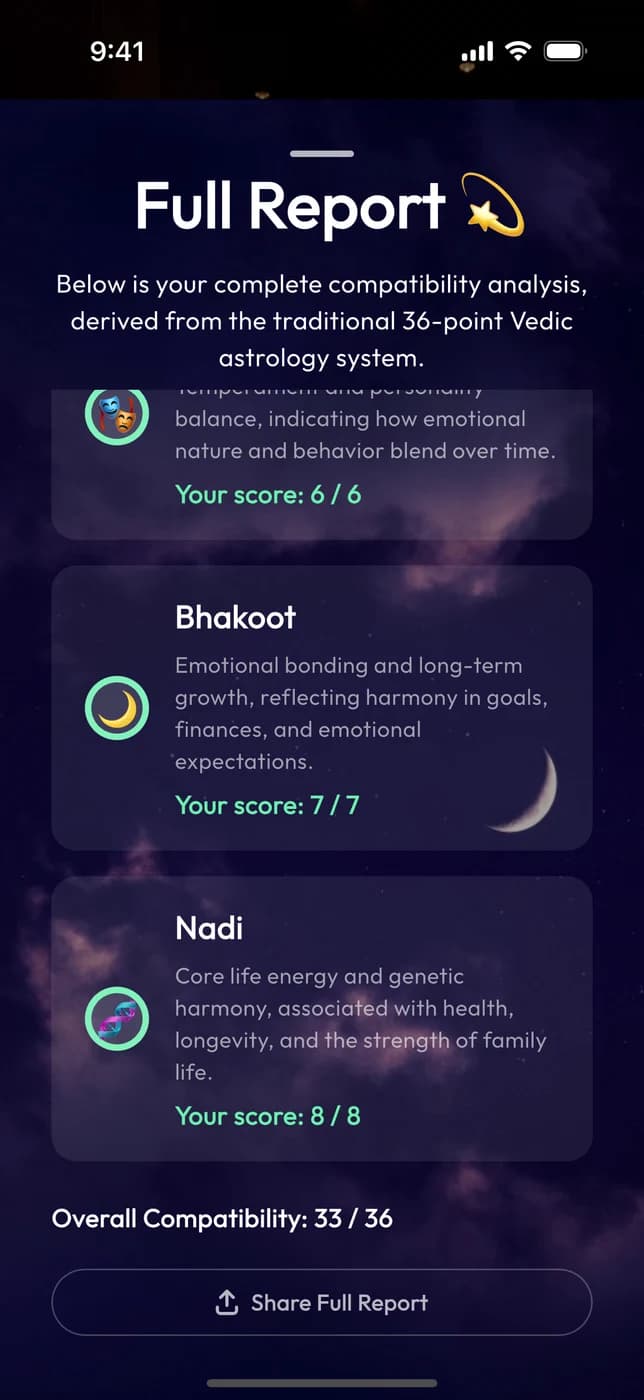
- Graha Maitri (5 points): friendship between the planets that rule each moon sign, read as mental compatibility and how well you get along day to day.
- Gana (6 points): temperament, with each nakshatra falling into Deva (divine), Manushya (human) or Rakshasa (demonic) gana.
- Bhakoot (7 points): the relative position of the two moon signs, linked to family harmony, prosperity and shared fortune.
- Nadi (8 points): the heaviest koota. Each nakshatra belongs to Aadi, Madhya or Antya nadi, traditionally connected to health and children.
1 + 2 + 3 + 4 + 5 + 6 + 7 + 8 = 36. That is the whole scale.
What Is a Good Guna Milan Score?
Here are the bands you will hear most often. They are tradition, not law, and plenty of families and astrologers draw the lines a little differently:
- Under 18: traditionally not recommended for marriage.
- 18 to 24: acceptable; an average match.
- 25 to 32: a good match.
- 33 to 36: an excellent match, and rare.
Many astrologers also say the total is only the starting point. They look at which kootas scored low, not just the sum, and some give more weight to Nadi and Bhakoot than to the rest. A 22 with a strong Nadi can be read very differently from a 22 without one.

Nadi Dosha and Bhakoot Dosha, Briefly
Two results tend to get the most attention in family conversations. Nadi dosha happens when both people share the same nadi, which scores zero out of eight. Bhakoot dosha happens when the two moon signs sit in certain positions relative to each other (for example second and twelfth, or sixth and eighth from each other), which scores zero out of seven.
Traditional texts also describe conditions under which these doshas are considered cancelled or softened, and astrologers apply them differently. So if a chart shows a dosha, it is usually a reason for a closer reading by someone your family trusts, not an automatic verdict.
Birth Details You Need: Date, Time and Place
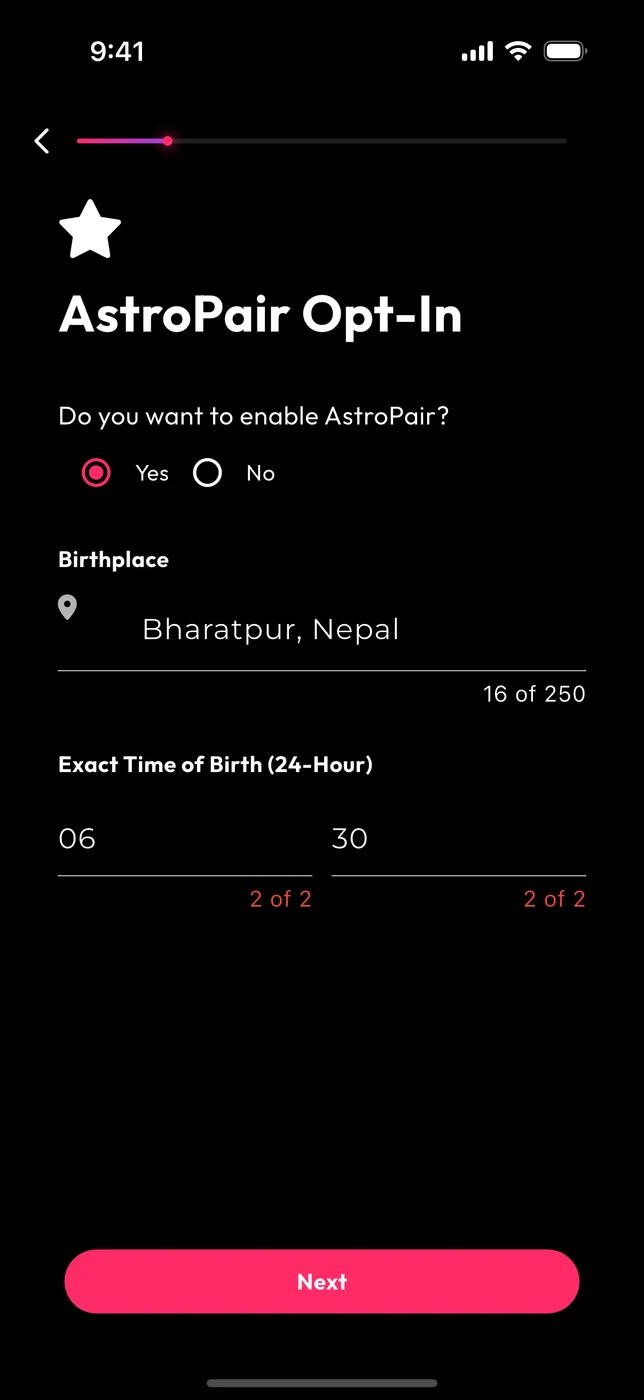
To build a kundali you need three things for each person: date of birth, time of birth and place of birth.
Time matters more than people expect. The moon moves through roughly one nakshatra a day, so being a few hours out can put you in a different birth star, or even a different moon sign, and that can change several kootas at once. Place matters because the chart depends on local time and where you were on the earth. If you are not sure of your time, check your cheena or ask the person who would remember. Moms usually do.
A Score Is Not the Whole Story
Kundali matching is a tradition that many Nepali families value deeply, and taking it seriously is a way of respecting them. It can also be a lovely conversation starter: comparing charts with someone is a very Nepali way of flirting.
But a number cannot tell you whether someone is kind, whether you want the same things, or how the two of you handle a hard week. Plenty of happy couples have modest scores, and a perfect 36 does not do the work of a relationship for you. Think of Guna Milan as one input next to shared values, honest communication and how you feel around each other.
Check Your Guna Milan on Klik
Klik has kundali matching built in. AstroPair is our own Ashtakoota engine, verified against traditional calculations: it runs a full analysis across all eight kootas and gives you a real 0 to 36 Guna Milan score from your and your match's birth charts. You can earn stars for checks by watching short ads, and memberships add more.
Curious what the stars say about you two? Get the app and find out.